















Looking for a sweet treat with a hint of sourdough flavor? You need to try these buttery Sourdough Sugar Cookies!
Made with either sourdough discard or active starter, they are perfect for celebrations, potlucks, bake sales, or Christmas cookies for the holiday season! Decorate them, or enjoy them undecorated – it's up to you.

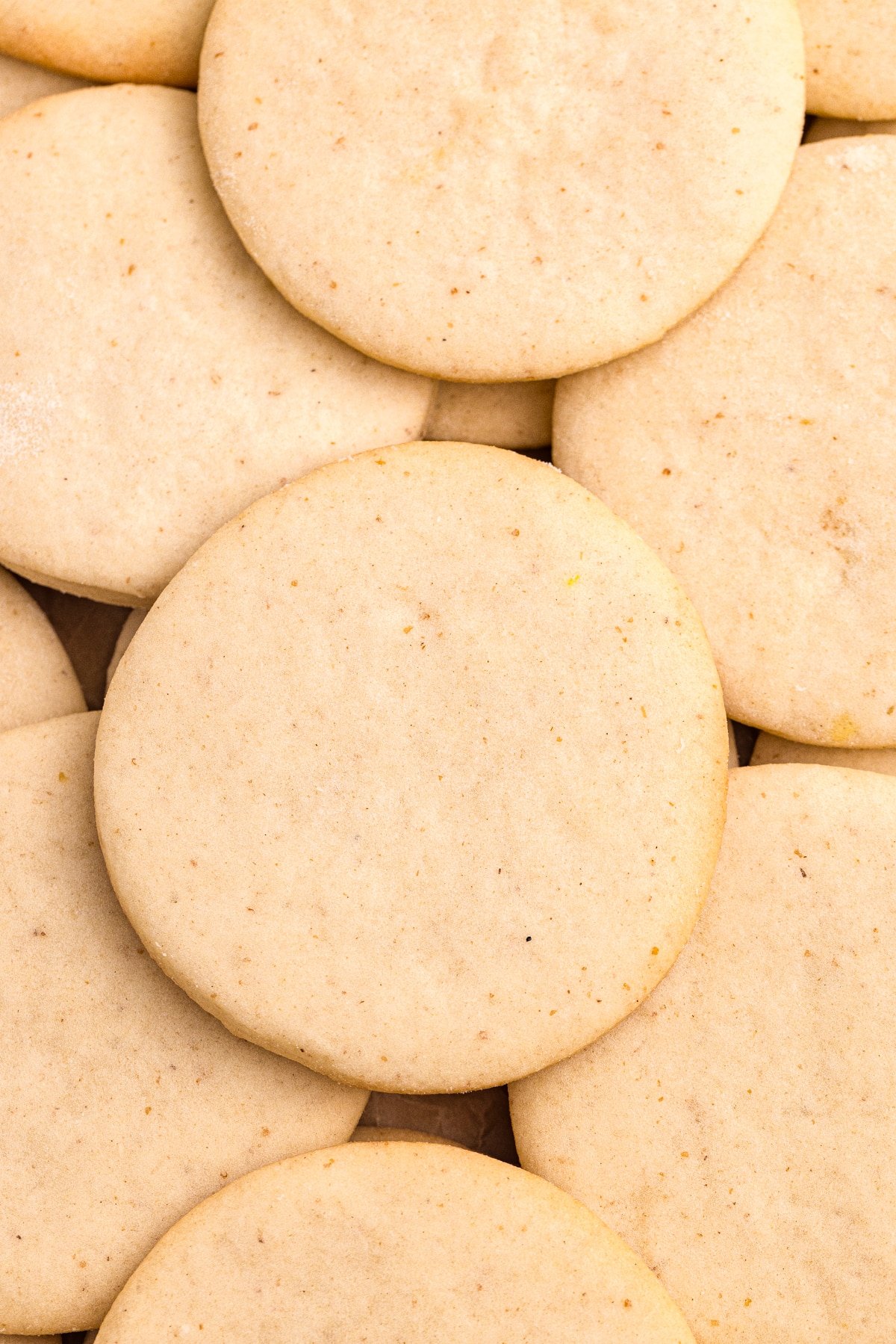
These sourdough sugar cookies are buttery, soft, and slightly tangy thanks to the addition of sourdough starter!
The dough can be chilled for just an hour, OR fermented in the fridge for up to 48 hours for added benefits, deeper flavor, and even smoother rolling texture.
These cookies are perfect for cut-outs, drop cookies, or decorated holiday cookies! We have LOVED them, and I know that you will too.
Why You'll Love Them:
- Uses sourdough starter (or discard). If you're a sourdough baker, chances are you love looking for ways to make all your favorite baked goods sourdough! These cookies are a great way to do that.
- The perfect texture. Fermenting the cookie dough makes for smooth, soft, and buttery cookies that are even better than the regular kind.
- Perfect for the holidays. If cookie exchanges or bake-offs are one of your traditions, try incorporating sourdough to up the rustic and cozy factor.
You Will Need:
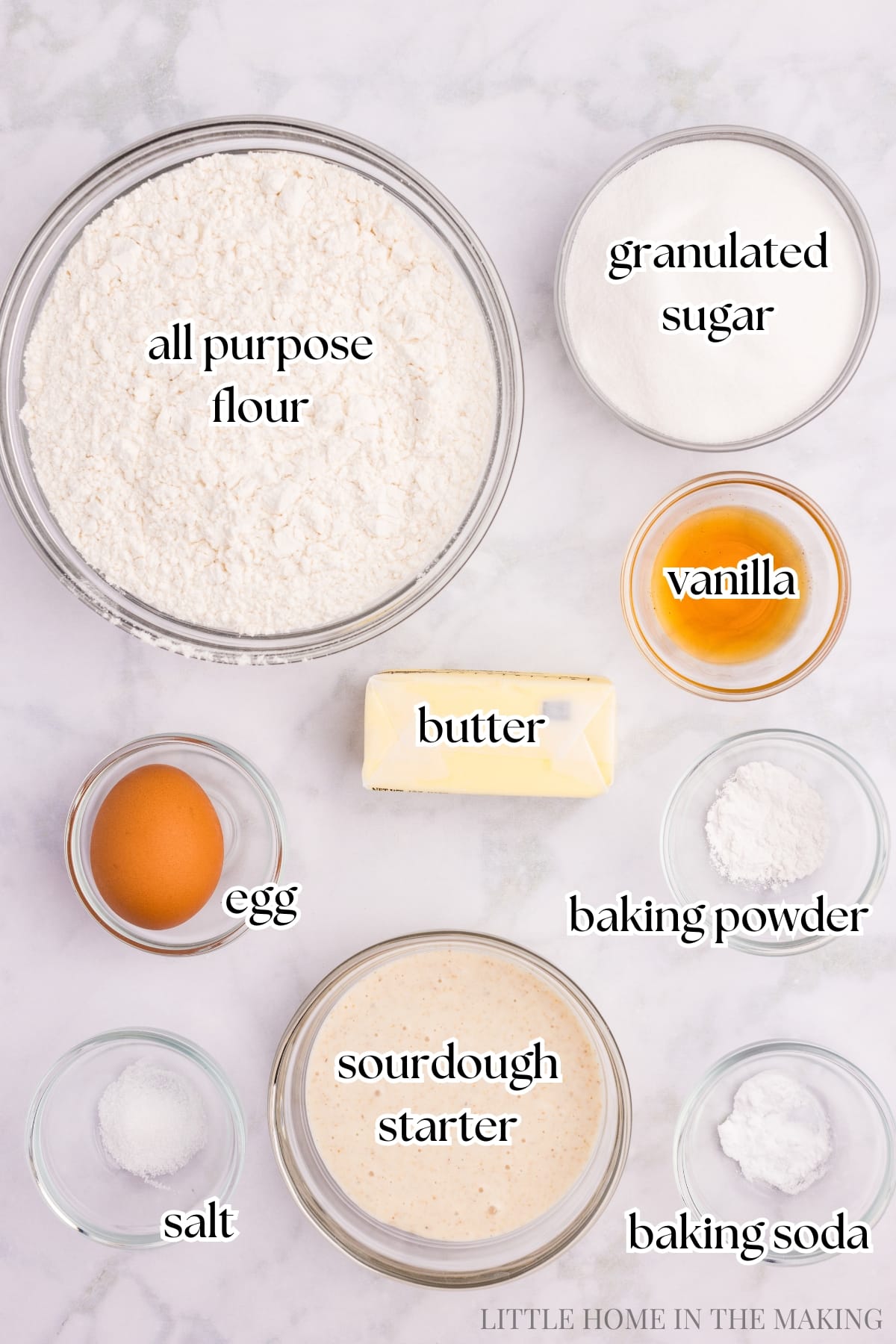
- Butter: This provides richness and a tender crumb. We recommend using unsalted butter for most baking recipes, but if you want to use salted butter instead, just cut the salt in the recipe by half.
- Sugar: Sweetens and helps the cookies to hold their shape. Cane sugar or organic sugar can be used if you prefer.
- Egg: Adds structure and acts as a binder. Room temperature is preferred.
- Sourdough starter: You can use either sourdough starter discard or active starter. This adds a subtle tanginess and moisture. If using an active starter, stir down the starter first to reduce the volume.
- Flour: We recommend all-purpose flour for all cookie recipes.
You will also need:
- Baking powder
- Baking soda
- Salt
How to Make Sourdough Sugar Cookies
Sourdough discard sugar cookies are the perfect sweet treat with a subtle tang. These chewy cookies are a delicious way to celebrate your favorite holiday or indulge in a little sweet treat on the weekend. Leave them undecorated, or add your favorite frosting, sprinkles, etc.
Making the Sugar Cookie Dough
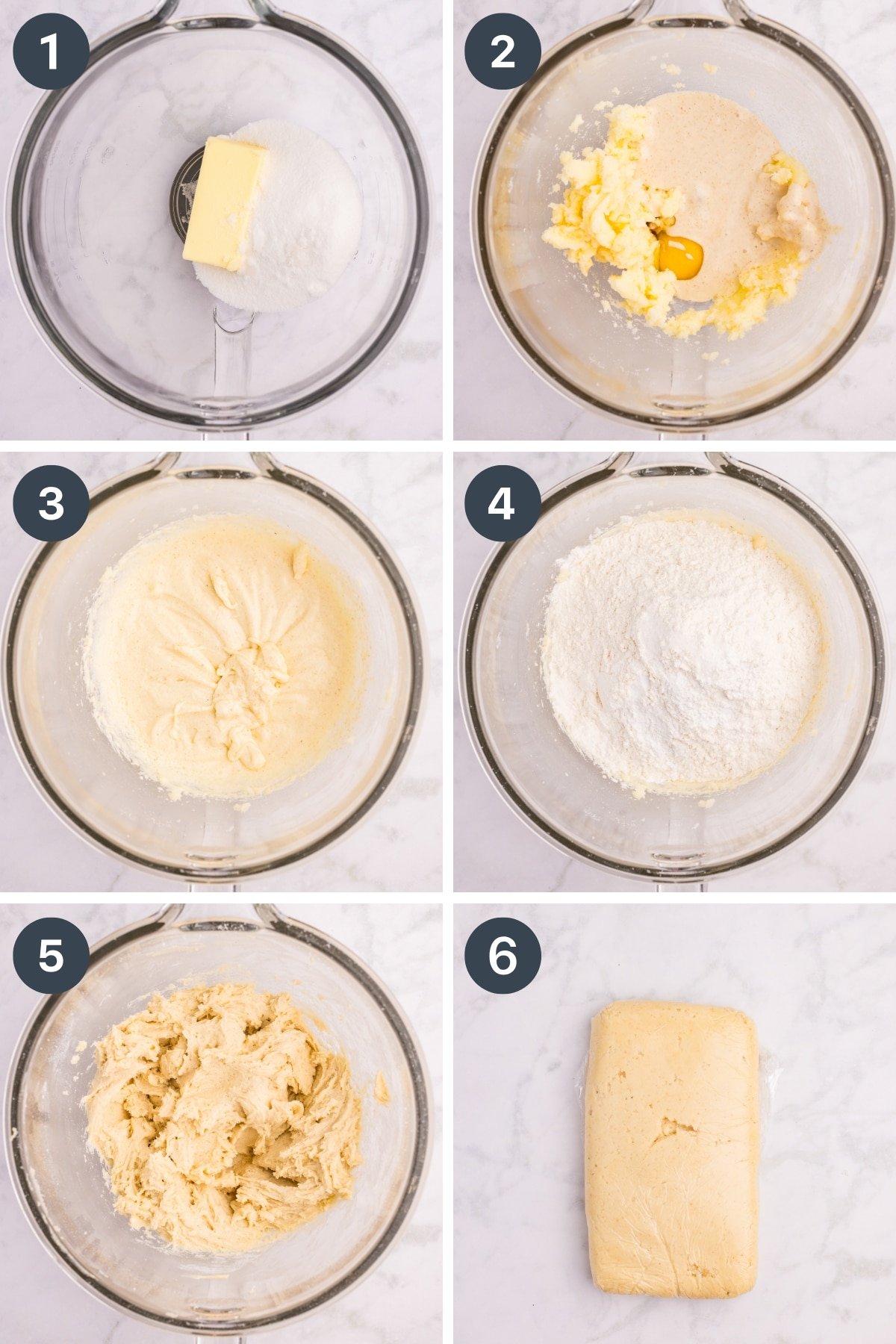
- Add the butter and sugar to the bowl of a stand mixer (or large bowl).
- Cream the butter and sugar together using a stand mixer fitted with a paddle attachment or a hand mixer.
- Add in the egg, vanilla extract, and sourdough starter. Mix until smooth.
- Whisk together the dry ingredients (flour, baking powder, baking soda, and salt), and add them to the wet ingredients.
- Mix by hand just until combined (do not overwork the dough).
- Pull the dough away from the sides of the bowl, form it into a rectangle or log, and wrap it tightly with plastic wrap. Place the dough in the refrigerator and chill (cold ferment) for at least 30 minutes, but 12 hours to 48 hours is optimal.
How Long Should I Chill the Dough?
During the testing process, we tried out many variations on cold fermentation (AKA chilling) times to get the perfect texture. Here are some of our notes:
- 2 days: This had the best flavor and texture! We highly recommend this timeframe, but if you want your cookies sooner (or later), there are many options.
- 12 hours: This was our second favorite. There was a significant flavor change compared to the shorter fermentation time.
- 30 minutes - 4 hours: The flavor for this time range is virtually the same, although cookies that are chilled for longer hold their shape much better during baking.
- 3-4 days: This is when the "sour" taste begins to increase. We enjoyed cookies that had been cold fermented for 3-4 days, but 4 days is really their upper limit. If you want to store your cookie dough for longer than that, we recommend freezing it.
Rolling and Shaping the Cookies
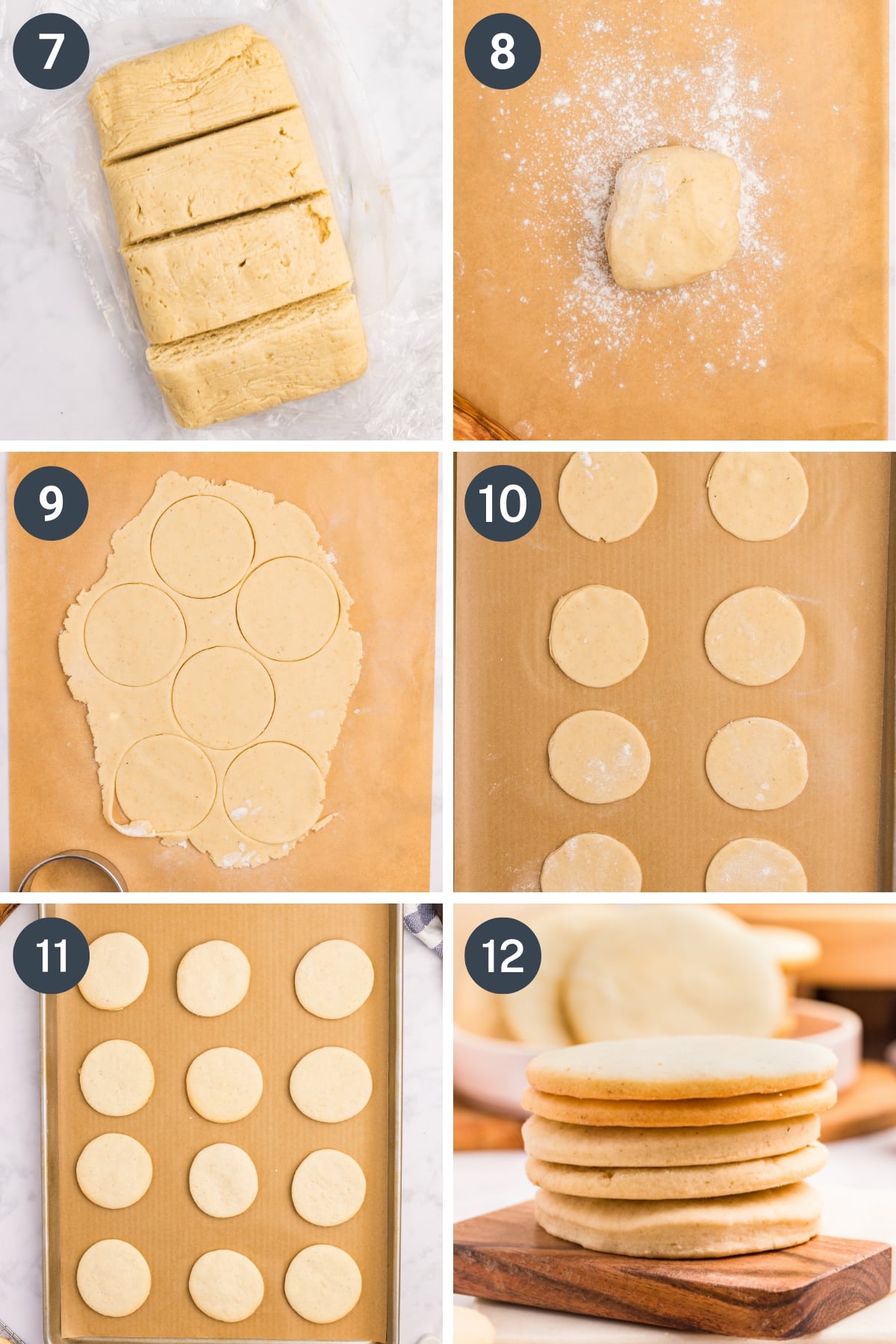
- Divide the dough into 4 sections, leaving 3 of the sections in the refrigerator to keep cold during rolling. Line a cookie sheet with parchment paper.
- Place your dough on a lightly floured surface.
- Roll the dough to ¼" thickness and use cookie cutters to cut them into shapes (we used a 3" round cutter, but you can use your favorite cookie cutters, including seasonal shapes).
- Place the cookies on a prepared baking sheet.
- Bake in a 350ºF (175ºC) oven for 9-11 minutes, or just until the edges are set.
- Remove from the oven and allow to cool on the cookie sheet for 5 minutes, then transfer the cookies to a wire rack to cool the rest of the way. Repeat with the remaining dough, working in batches, until all of the cookies are baked.
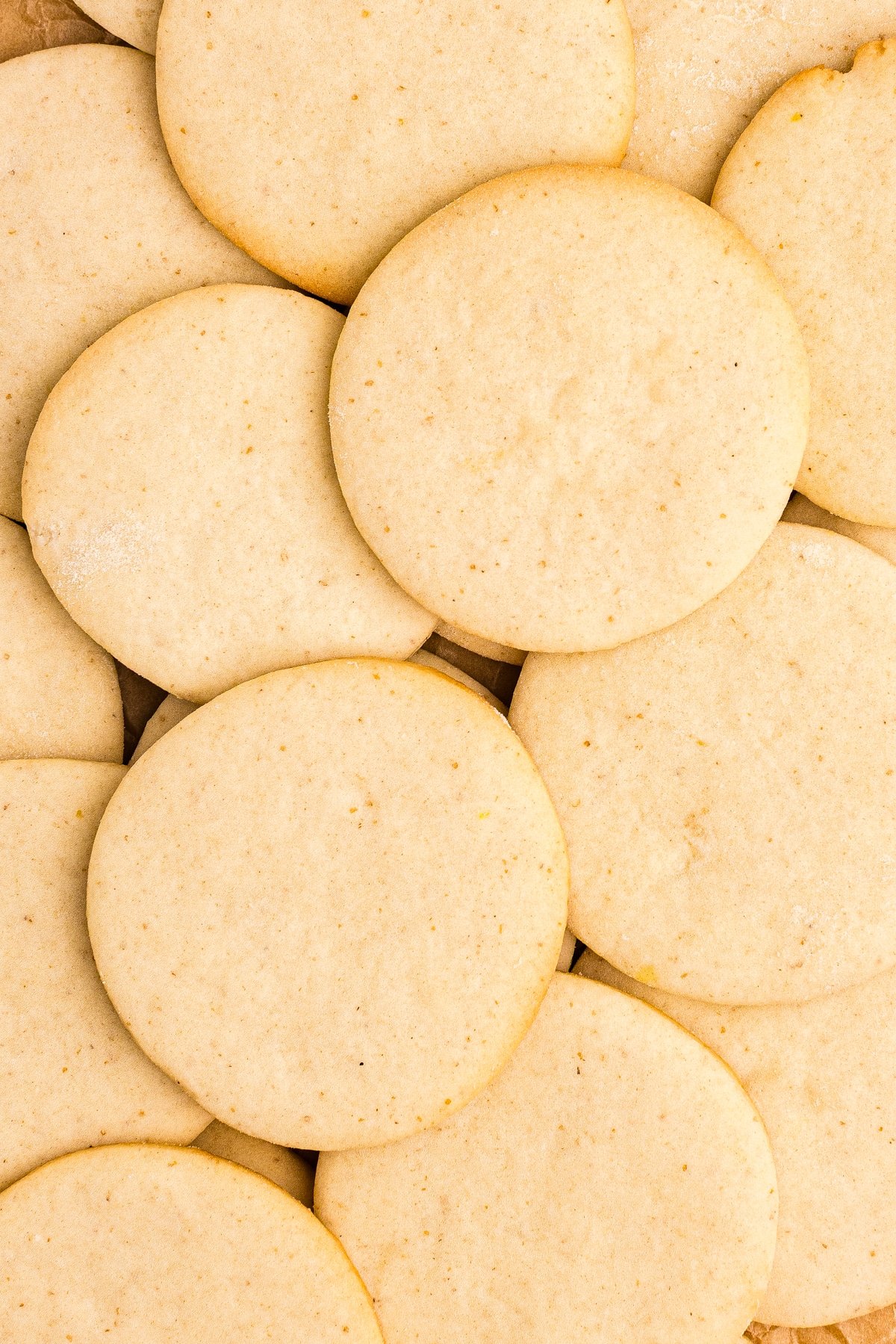
Storing Leftover Sugar Cookies
- Room temperature storage: Store undecorated cookies in an airtight container for up to 5 days.
- Decorated cookies: These can be stored in an airtight container for 3-4 days, but should be in a single layer (you may need to use multiple containers).
- Freezing baked cookies: Place cooled cookies in a freezer-safe bag or container. Store in the freezer for up to 2 months; thaw at room temperature.
- Freezing unbaked cookies: Form the dough into a ball or a log and wrap tightly with multiple layers of plastic wrap. Place in a freezer bag and freeze for up to 3 months. Thaw overnight in the refrigerator before rolling.

Variations and Tips
- For softer cookies: Bake until the edges are just set and the centers are slightly underdone. Allow to cool on the baking sheet before transferring to a wire rack.
- For crisp cookies: Roll the cookies a bit thinner and bake for 1-2 minutes longer than the recipe calls for.
- To prevent sticking: Make sure to chill the dough well and use a floured rolling pin when rolling and cutting shapes.
- Flavor: Add a touch of almond extract, citrus zest, a scraped vanilla bean, or a sprinkle of cinnamon sugar to change the flavor.
- Brown butter: If you like your sugar cookie recipes extra buttery and nutty, try using browned butter instead!
- Ready for frosting? These cookies work well for a variety of frostings, including buttercream, royal icing, or a simple glaze.
Recipe FAQs
Yes! Active starter works just as well! You'll want to make sure to stir it down before measuring, as active starter has a higher volume than sourdough discard.
You can ferment the dough for up to 4 days in the refrigerator, but the peak flavor is around day 2. If you're in a hurry, you can chill the dough for just 1 hour.
Cookies that spread are inadequately chilled. Chilling the dough ensures the cookies hold their shape. Using room temperature dough will lead to thin, spread-out cookies.
We have not tested this recipe with gluten-free sourdough starter or with gluten-free flour. If you do and have success, please let us know in the comments!
Yes! This recipe scales well for high-volume holiday baking. I have one caveat – make sure your bowl is big enough!



If you loved this Sourdough Sugar Cookie recipe, let me know by leaving a 5-star review in the recipe card or comment below! You can also tag me on Instagram @littlehomeinthemaking.
📖 Recipe

Sourdough Sugar Cookies
Ingredients
- ½ cup unsalted butter softened (113g)
- ¾ cup granulated sugar (150g)
- 1 large egg (50 grams)
- 1 teaspoon vanilla extract (6 grams)
- ½ cup sourdough starter or discard* 100% hydration (120 grams)
- 2 ¼ cups all-purpose flour (270g)
- ½ teaspoon baking powder (2.5 grams)
- ¼ teaspoon baking soda (1.2 grams)
- ½ teaspoon sea salt (3 grams)
Instructions
- In a large mixing bowl, cream together the butter and sugar until light and fluffy (2-3 minutes). This can be done with a stand mixer using the paddle attachment, an electric hand mixer, or by hand (you’ll need to use those muscles!).
- Add the egg, vanilla, and sourdough starter and mix until smooth and well combined.
- Combine the dry ingredients in a bowl: flour, baking powder, baking soda, and salt.
- Add the dry ingredients to the wet ingredients, and stir by hand just until combined (you do not want to overwork the dough).
- Bring the dough together into a solid mass and shape it into a log or rectangle. Wrap it tightly with plastic wrap or parchment paper (using several layers) and transfer it to the refrigerator.
- Chill the dough for at least 30 minutes, but longer is better. Our recommended cold fermentation period is 12 hours to 2 days (see notes** for a breakdown of how short or how long you can ferment the dough).
- When you’re ready to bake, preheat the oven to 350°F (175 °C) and line a cookie sheet with parchment paper. Set aside.
- Working in batches (leaving the dough in the refrigerator between batches to keep it chilled), roll the dough on a lightly floured surface. It should be about ¼” thick (0.6cm). Using a cookie cutter, cut the dough into shapes or rounds (we used a 3” (7.6cm) round cookie cutter, but various shapes and sizes can be used. Note: Keep an eye on the edges, especially for smaller cookies.
- Place the cut-out cookies on the prepared baking sheet. Bake for 9-11 minutes, or until the edges are set, but not browned.
- Allow the cookies to cool on the baking sheet for 5 minutes, then transfer them to a wire rack and cool completely before icing.
- Repeat with the remaining dough, working in batches until all of the cookies are baked.
- Once the cookies are cooled, add your favorite glaze, frosting, sprinkles, etc.
Notes
Nutrition
Please note that some of my blog posts here at Little Home in the Making may contain affiliate links. If you make a purchase through these links, I will get a small commission at no additional cost to you. See our disclaimer for more information.




Dolly | Little Home in the Making
These are so delicious and easy to make! They use less butter than most cookie recipes, but taste just as buttery with a slight sourdough tang.