















This sourdough croissant bread combines the rich, buttery flavor of croissants with the rustic texture of artisan sourdough bread.
All of the flavor with just a fraction of the work!
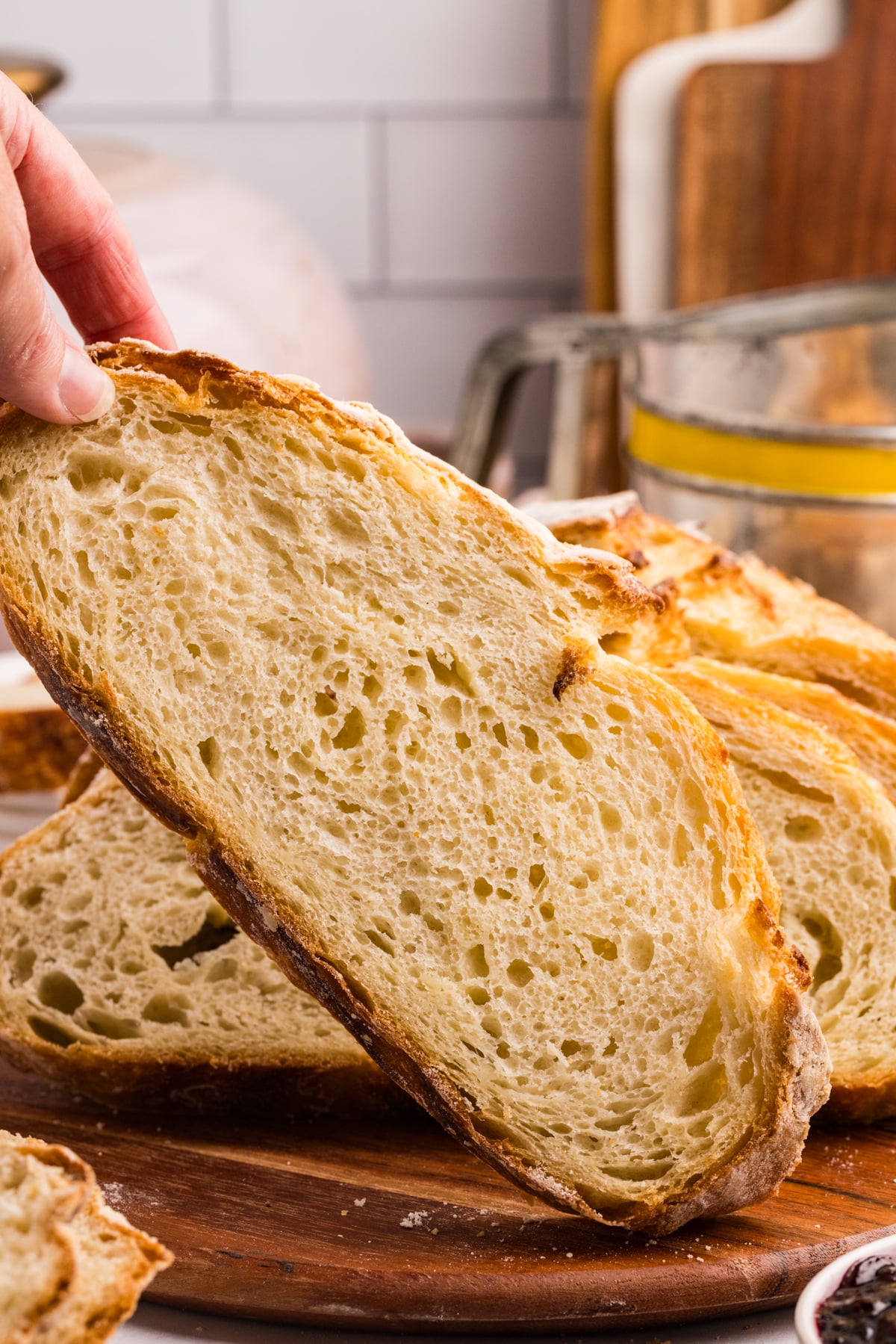
Ever wanted the buttery goodness of croissants, without all the work? You NEED to try this buttery sourdough croissant bread!
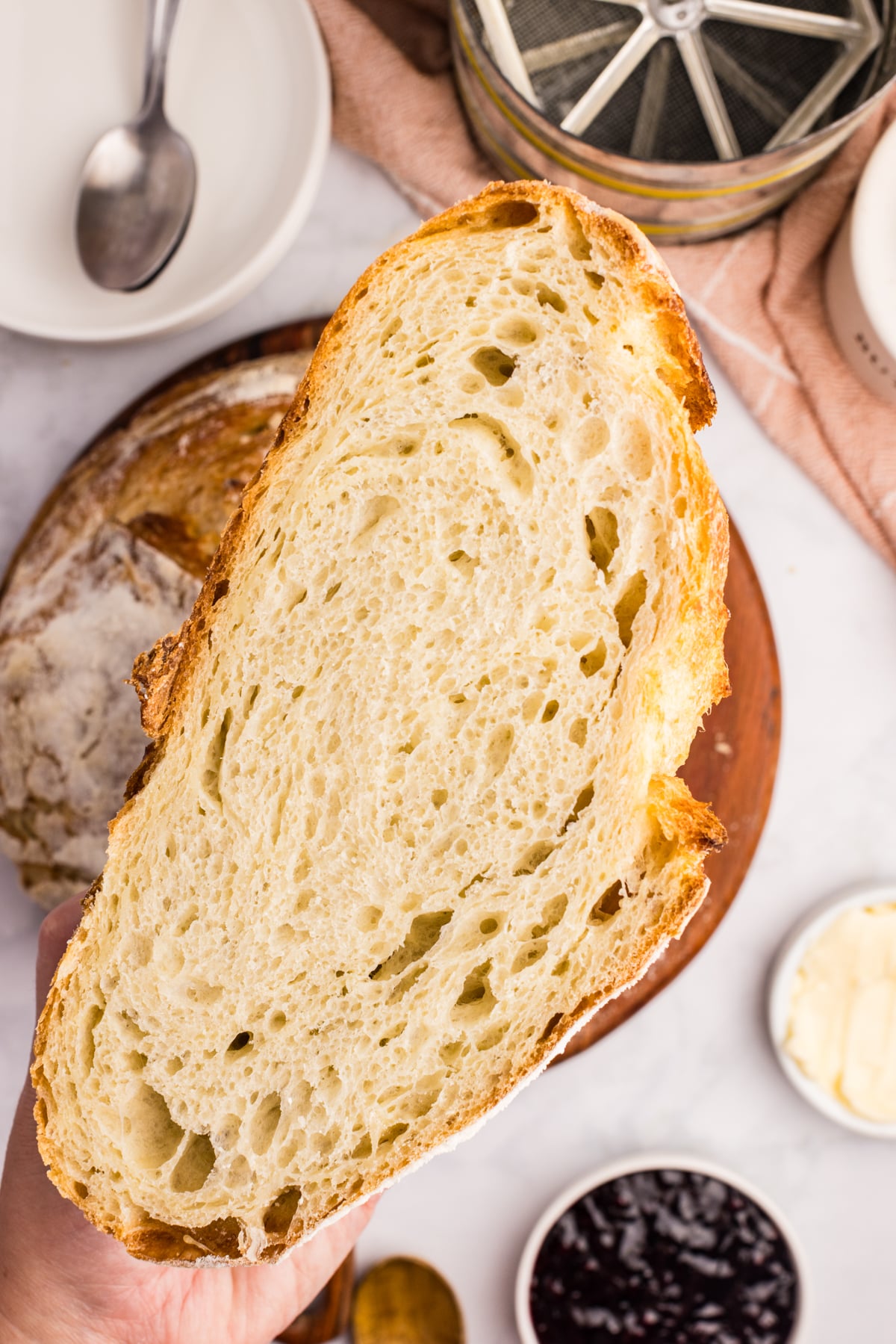
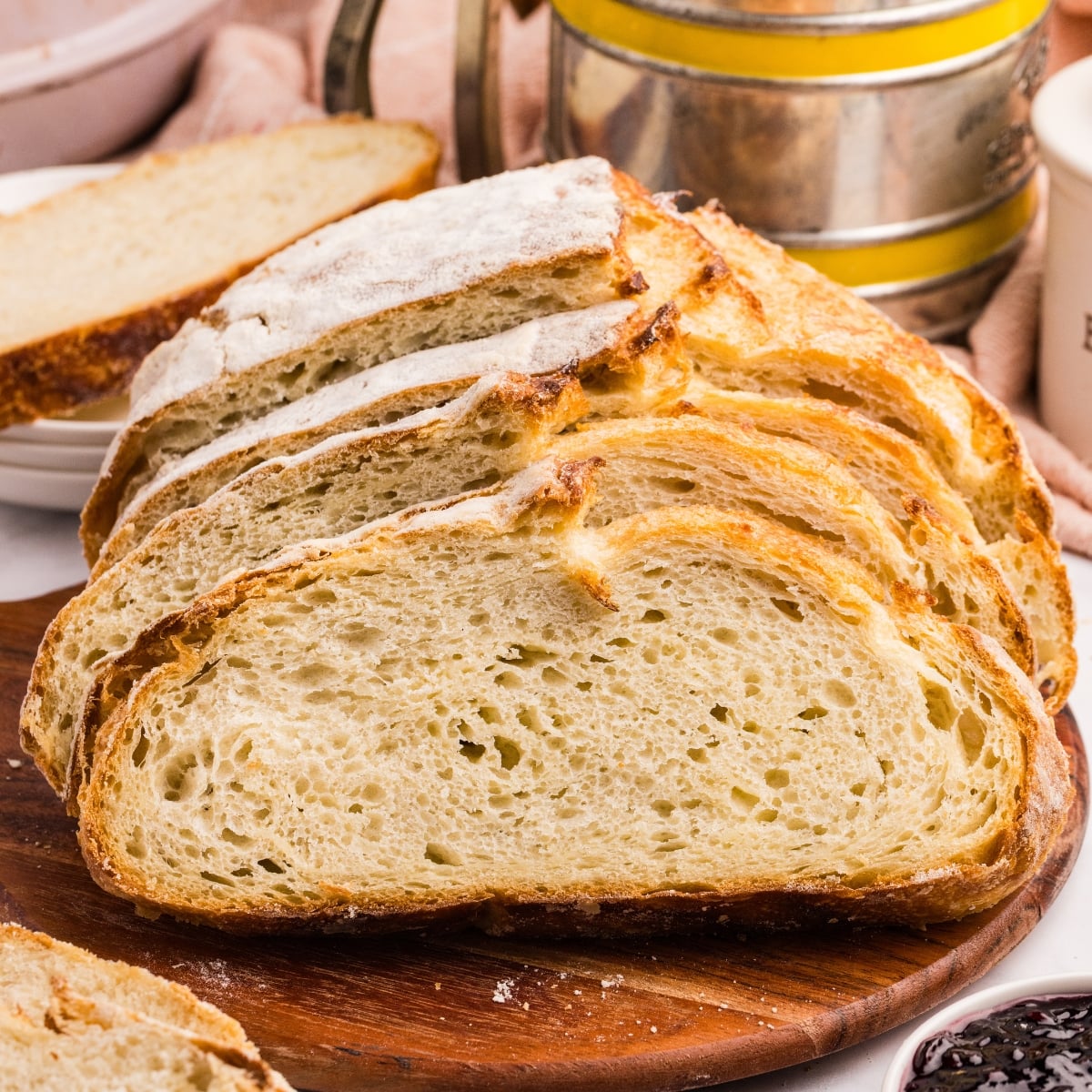
Grated butter is folded throughout the dough to create delicate flaky layers and a tender interior, all baked into a beautiful boule-style loaf with a crisp golden crust.
It's an easier alternative to traditional laminated croissants while still delivering a buttery, bakery-style result. We ADORE it, and know you will too!
Why You'll Love It:
- Sooooo buttery! If there is a better combo than bread and butter, I've yet to find it. Flaky layers of cold butter make this recipe spectacular.
- Way easier than traditional croissants. No butter block or intense lamination techniques needed. A simple no-knead sourdough recipe is filled with cold butter before you allow the dough to rise, creating buttery layers of flaky goodness.
- Great for a special occasion. If you want to stun your guests, or add extra flair to sourdough French toast, this is the best way to knock them off their feet!
Ingredients
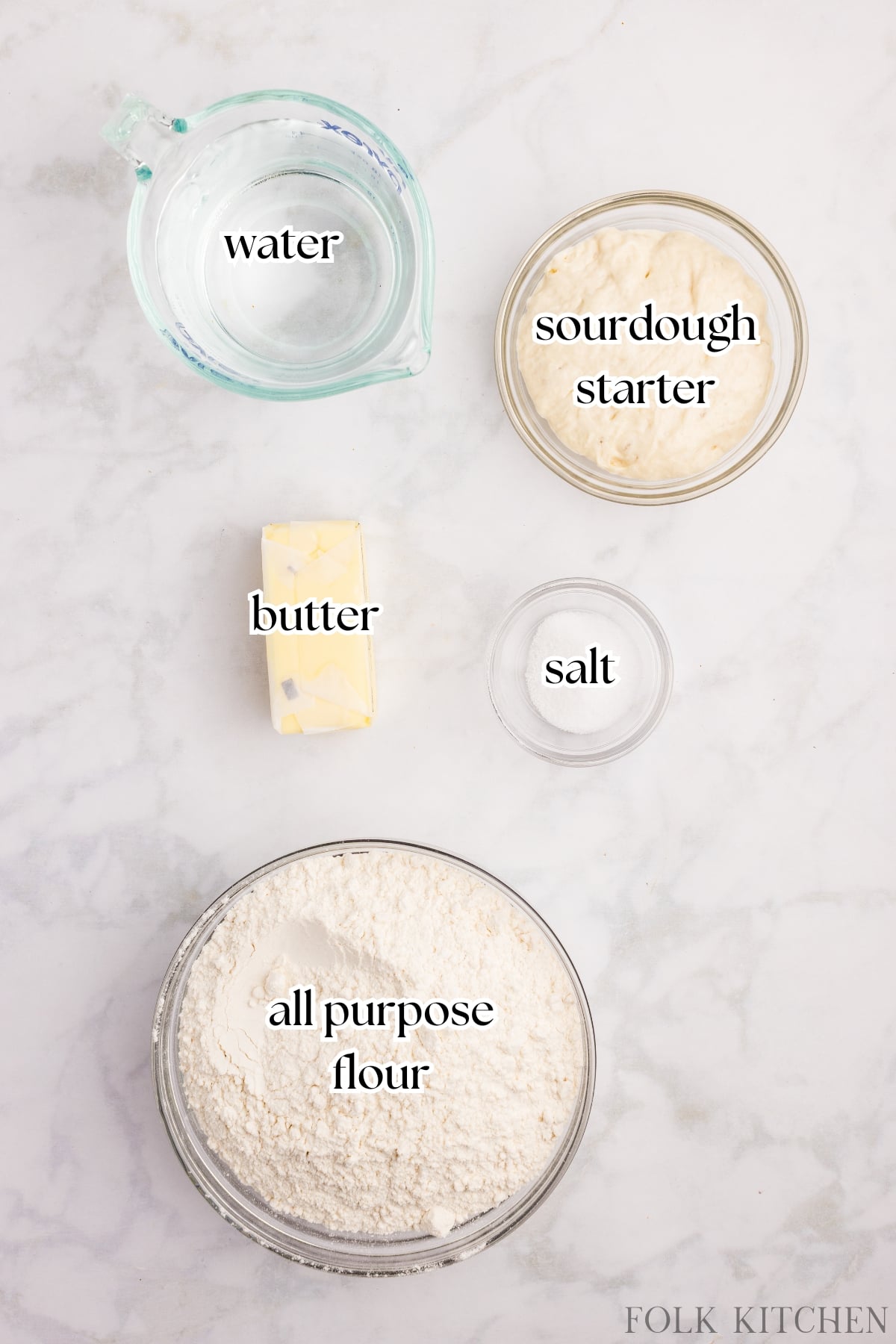
- Sourdough starter: Active starter naturally leavens the bread without the use of commercial yeast while adding a subtle tangy flavor and chewy artisan texture. Ensure your starter has recently been fed, is bubbly, active, and reliably doubling within 24 hours.
- All-purpose flour: Using all-purpose results in a tender, slightly softer texture that resembles croissant dough more than traditional rustic sourdough. It provides enough structure for the loaf while still allowing the interior to remain light and delicate.
- Butter: Cold, grated butter creates thin layers and pockets throughout the dough that melt during baking, producing a flaky croissant-like texture. Using unsalted butter allows better control over the overall salt level in the bread.
- Water: Room temperature water helps encourage steady fermentation during the bulk rise.
- Salt: This enhances the flavor while also strengthening the gluten structure. It helps regulate fermentation; the dough rises steadily without overproofing.
Recommended Tools
- Large mixing bowl (we recommend Mason Cash bowls)
- Box grater
- Dutch oven (or bread cloche)
- Banneton or towel-lined bowl
- Parchment paper (or silicone bread sling)
- Kitchen scale
- Bench scraper
How to Make Sourdough Croissant Bread
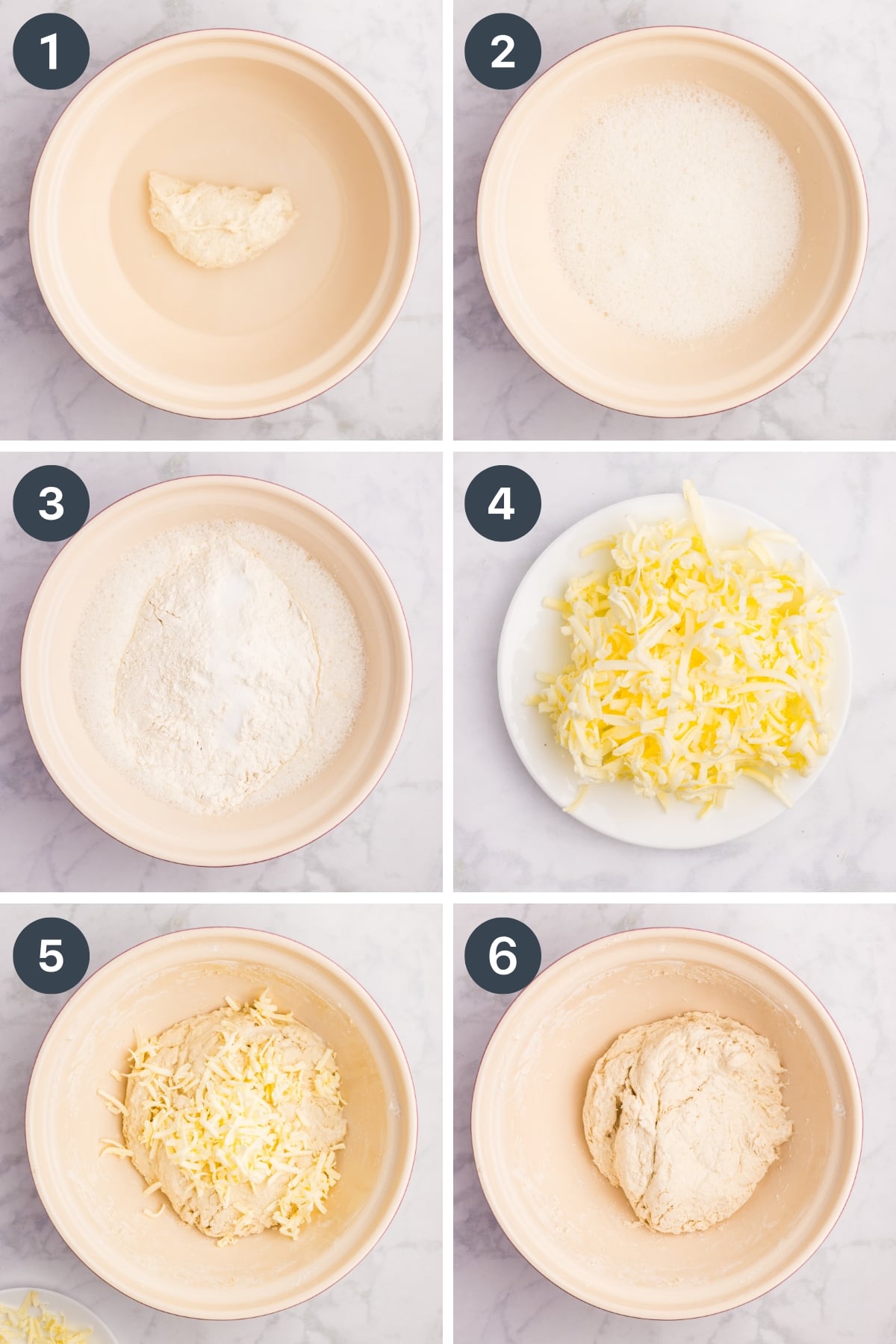
- Add 350 g water and 100 grams of active sourdough starter to a large bowl.
- Whisk gently until well combined.
- Add 500 grams of flour and 15 grams of salt to the water and sourdough starter. Mix until a shaggy dough forms (a dough whisk works well for this), then cover with plastic wrap and allow to rest for 30 minutes.
- Grate 1 stick of frozen butter using a box grater. Place in the freezer until needed.
- After the dough has rested for 30 minutes, add about a third of the grated butter on top of the dough and mix. Repeat until all of the butter has been added.
- Cover and let the dough rest at room temperature for 30 minutes.
The Stretch and Folds
After the initial autolyse, you're ready to perform several sets of stretch and folds to help build dough strength and develop the gluten.
Note that detailed instructions are further down if needed.
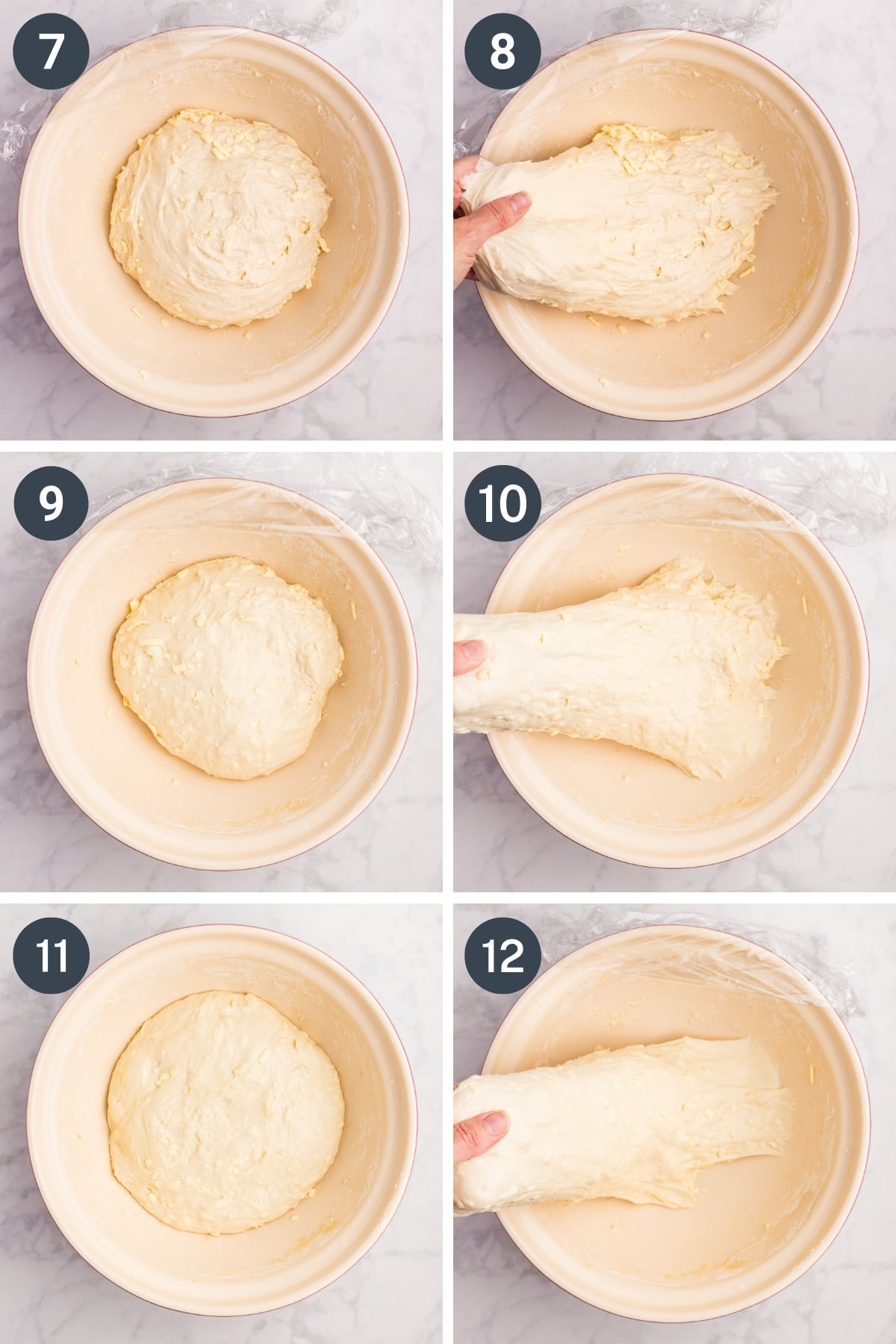
- Once your dough has rested for 30 minutes, uncover it.
- Perform a series of stretch and folds by pulling the dough up in intervals around the bowl (sometimes called a quarter turn), stretching it, and folding it back down on itself in the center.
- Rest the dough for 30 minutes.
- Perform another series of stretch and folds. Cover the dough.
- Rest the dough for 30 minutes, then uncover.
- Repeat another series of stretch and folds, then cover the dough and rest for another 30 minutes. Perform a final set of stretch and folds before moving onto the bulk fermentation.
Bulk Fermentation
Primary room temperature fermentation: Cover and let the dough rise at room temperature until it has increased in size by 60-75%. This should take about 4-8 hours depending on the temperature of the room.
Cold proofing (for flaky, buttery results): It's important to do a cold fermentation for croissant bread, as that coldness is what makes the dough flaky instead of just buttery and enriched (like with brioche). This is done by covering the dough and refrigerating it for 10-14 hours. You can refrigerate it for up to 24 hours if that works better for your schedule.
Shaping, Fermenting, and Baking the Loaf
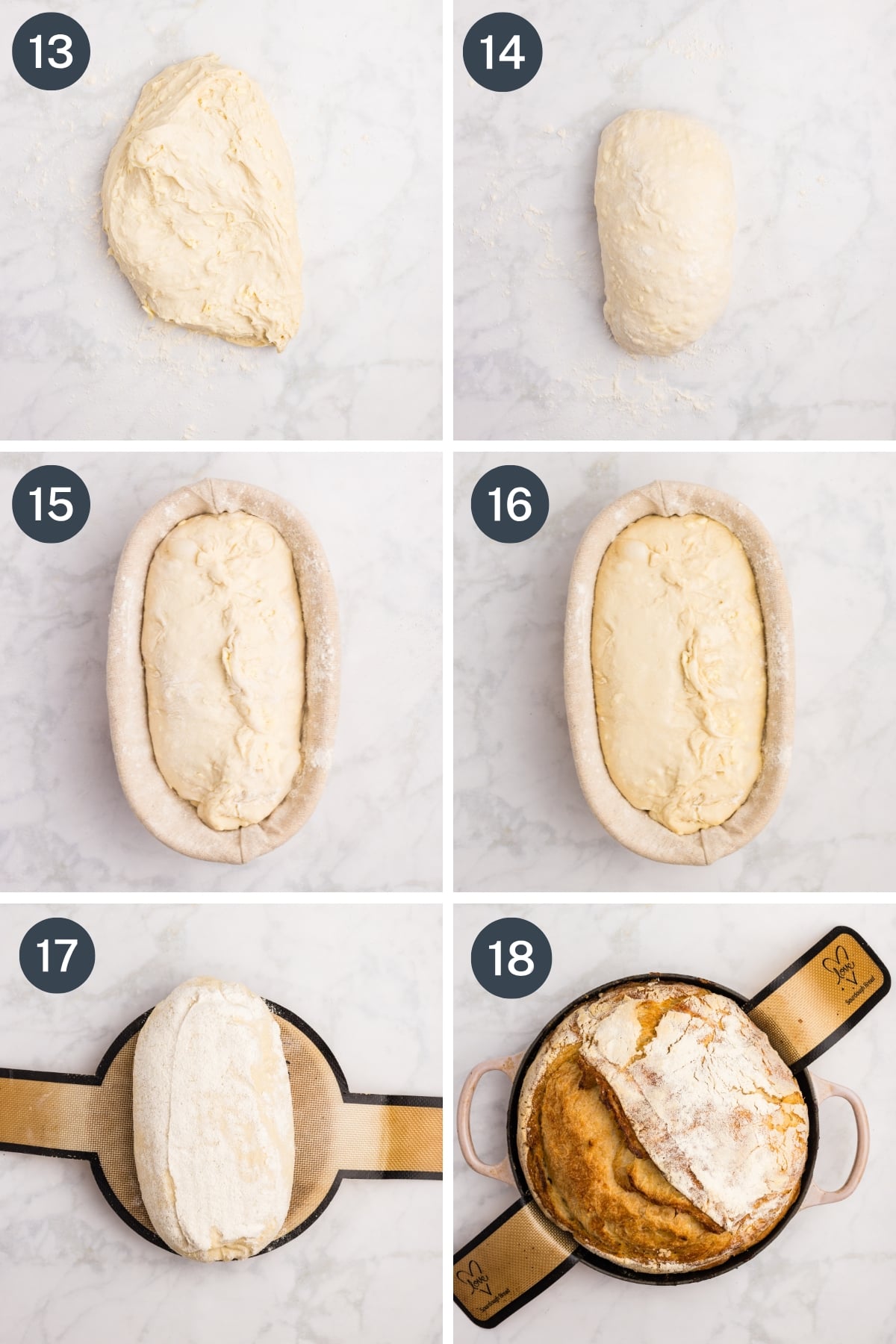
- After the room temperature stage of the bulk fermentation is complete, you're ready to turn out the dough on a clean, lightly floured work surface.
- Shape the dough into a loaf by folding in the edges and building surface tension by pulling it against the counter.
- Place the shaped loaf into a floured banneton basket or towel-lined bowl. Either oval or round may be used.
- Cover the basket and place it in the fridge for a cold fermentation of 11-14 hours, or up to 24 hours if needed.
- After the cold fermentation is complete, turn out the shaped sourdough loaf on a piece of parchment paper (or silicone bread sling). Place the cold dough in a hot Dutch oven that has been preheated in a 475ºF (240ºC) oven for 45 minutes.
- Add several ice cubes around the edge of the Dutch oven (to create steam) and bake with the lid on for 25 minutes, then remove the lid and bake for another 25 minutes.
Storing and Cooling
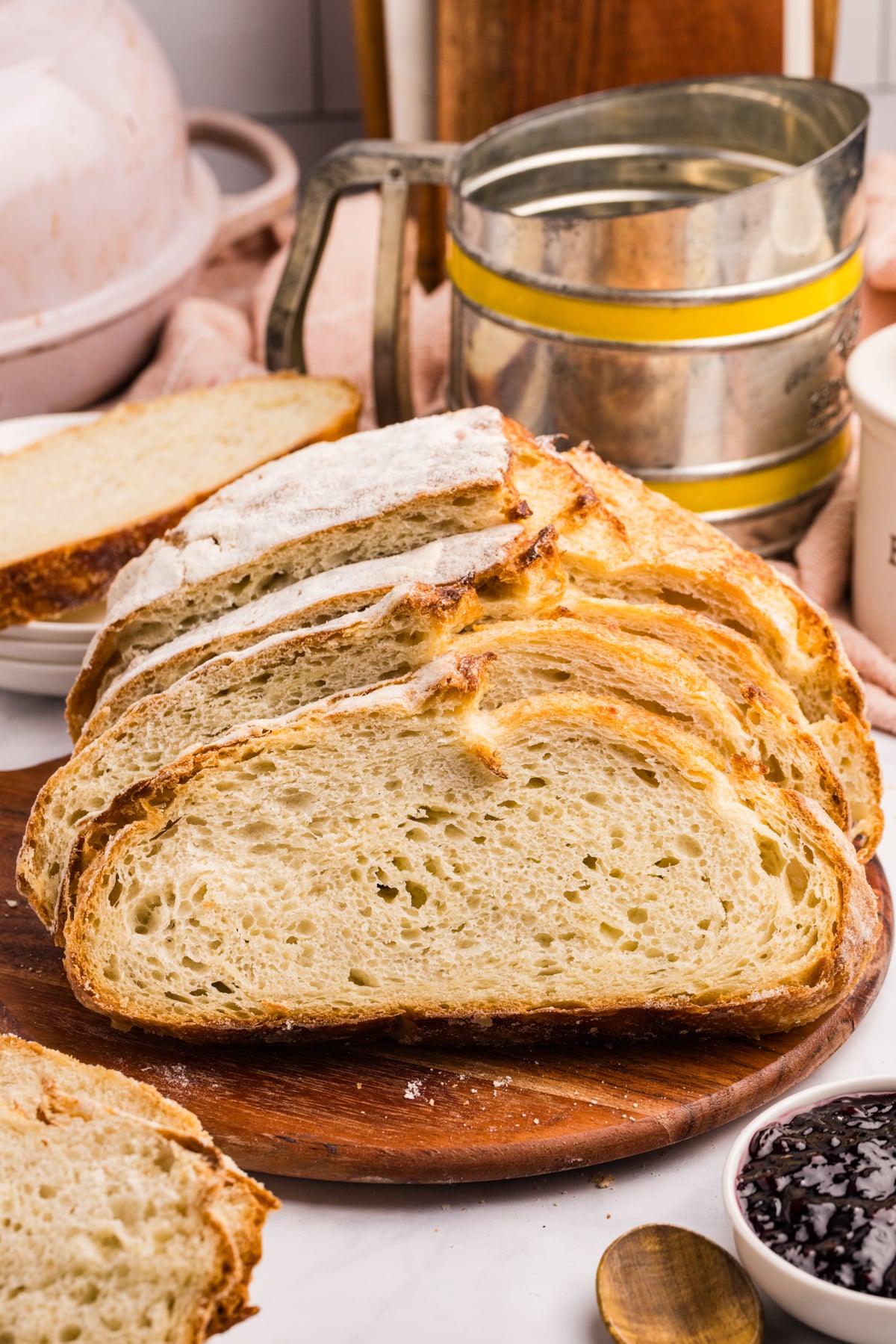
Be sure to cool your bread for at least 2 hours to ensure the crumb sets up. Once the bread is completely cooled down, you can store it for later use. Be sure not to store warm bread, as it will create condensation and cause the bread to lose it's texture or spoil quickly.
To store:
Wrap the loaf loosely or store it in a folded paper bag. Sliced bread may be stored in an airtight container for up to 3 days at room temperature.
For longer storage, transfer bread to the freezer (placed in a freezer bag) and freeze for up to 3 months. Thaw and reheat before serving.
How to Do Stretch and Folds
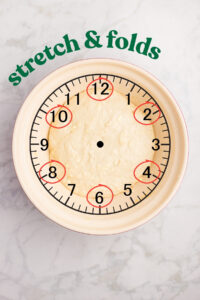
If you have not performed stretch-and-folds before, this is done by dividing the bowl like a clock.
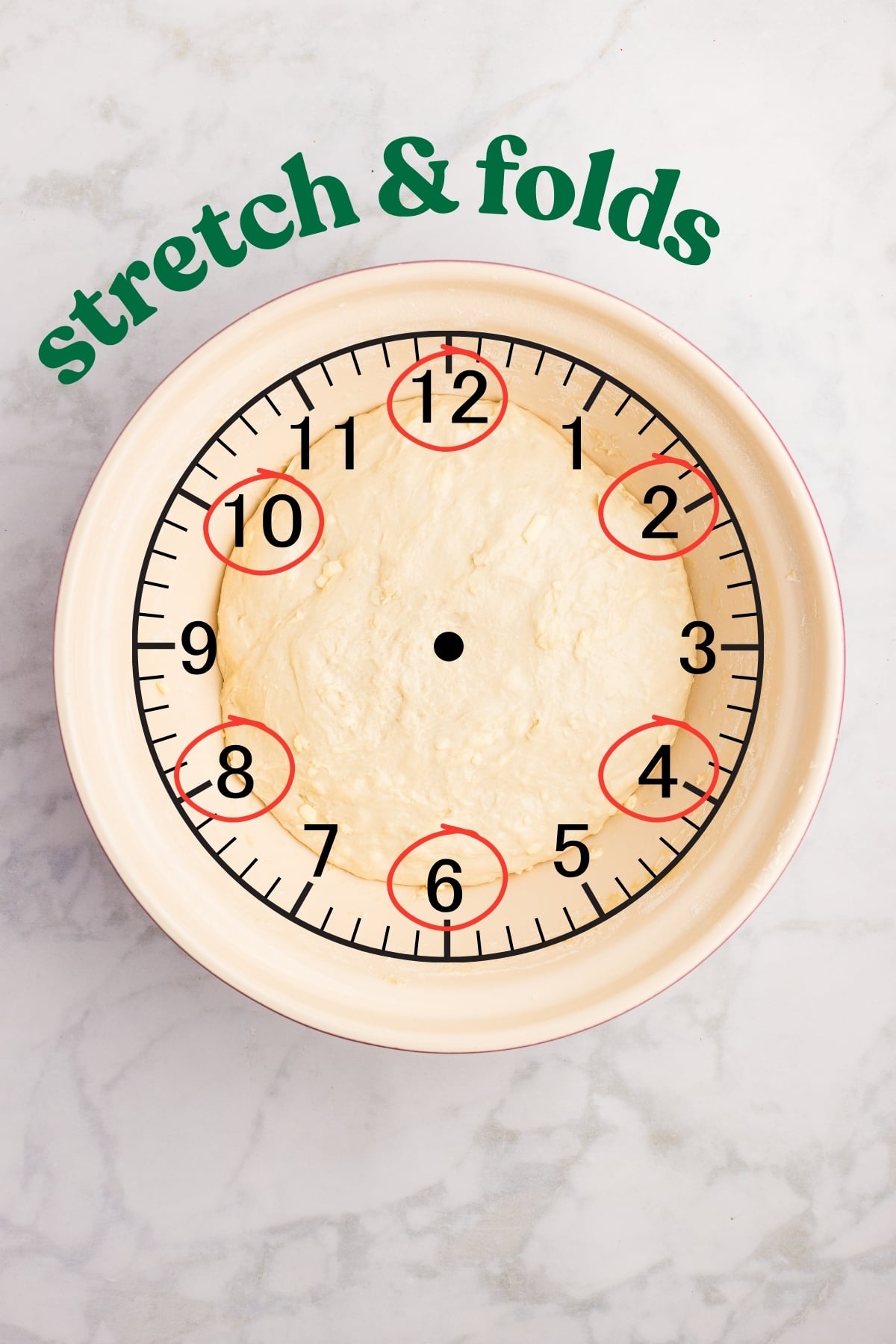
- Start at 12:00 (the top of the bowl), and use your hand to pull up a section of the dough as far as it will stretch without breaking, then fold it over into the middle.
- Repeat this for intervals of the “clock”.
- Depending on the type of dough, you may be able to do this at 12:00, 2:00, 4:00, 6:00, 8:00, and 10:00. If the dough is very thick or stiff, you might only be able to do 12:00, 3:00, 6:00, and 9:00.
This should be repeated every 30 minutes unless otherwise stated in the recipe. The dough will become smoother and more elastic with each series of stretch and folds.
Sourdough Expert Tips
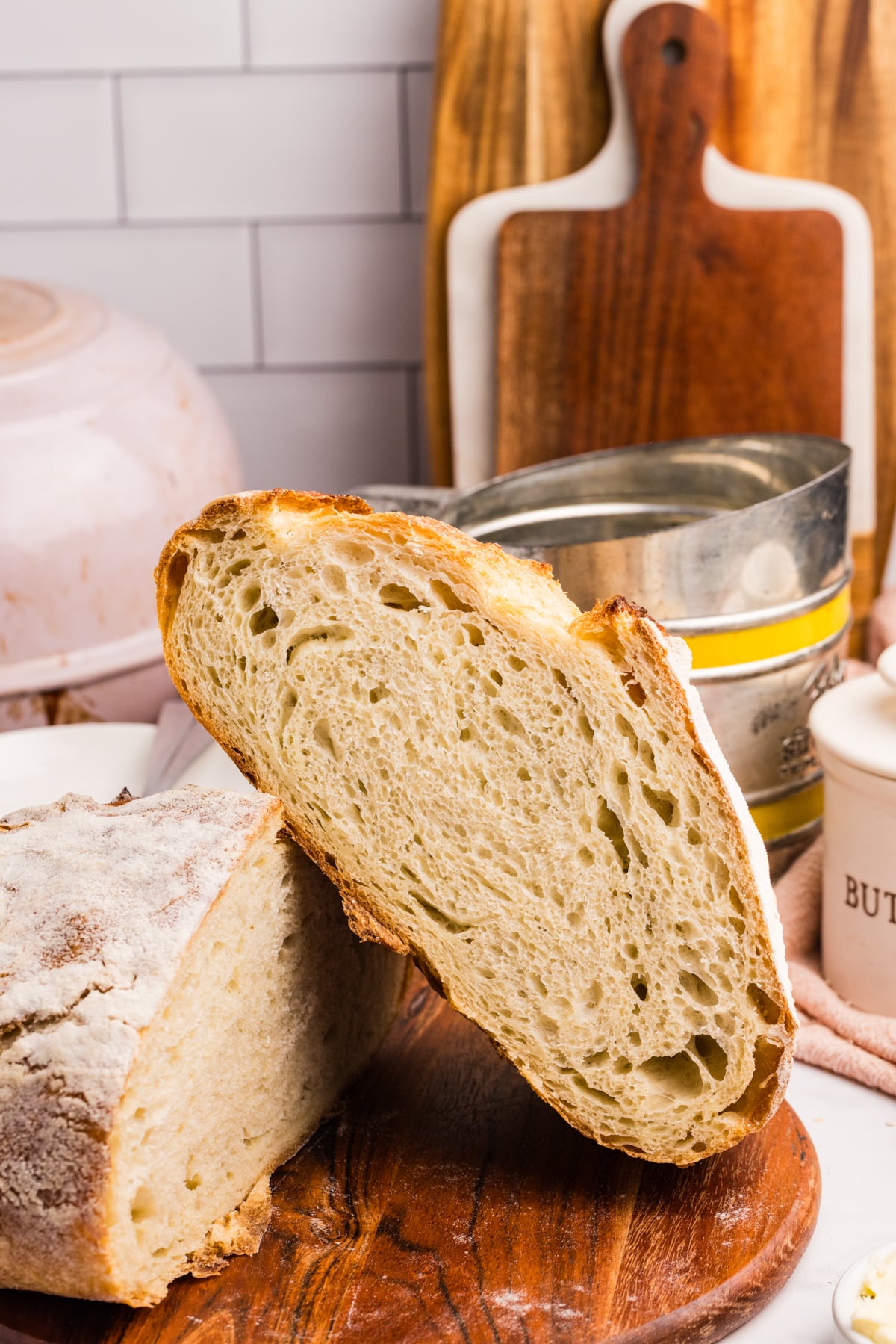
- Keep the butter cool. It's important to keep the butter cold as much as possible! This creates the flaky, layered texture that croissants are known for. Soft butter will result in a more brioche-like result.
- Warm kitchens need accommodations. If your kitchen is really warm (like the dead of Summer or if you have a wood stove), you may benefit from refrigerating the dough for 15-20 minutes between stretching sets.
- Use a mature starter. Make sure your starter is active, bubbly, mature, and at its peak. It should have a history of reliably raising bread, and not be fresh from the fridge (feed it a few times first).
- Dutch ovens are king. These help trap steam, keeping the bread moist with a great oven spring, while creating a crisp and golden brown crust.
- Ice cubes are a sourdough hack. I use the ice cube method in my Dutch Oven Sourdough Bread, and it's honestly the secret to the perfect loaf. It creates slow-release steam, making the bread perfect every time.
Recipe FAQs
Yes. Bread flour will create a slightly chewier loaf with a bit more structure and height, while all-purpose flour gives a softer, more tender crumb.
The dough should look puffier, smoother, and increased in volume by about 60-75%. It may also show bubbles along the side. Once the first bulk fermentation is complete, you can move forward with the cold fermentation.
No. Traditional croissants require repeated rolling and folding of butter layers. This recipe is a simplified version that uses grated butter folded throughout the dough to create a similar flaky texture with much less work.
Try This!
Chocolate Chip Croissant Bread
Add 1 cup of chocolate chips to the dough during the shaping process and before cold fermentation. I use this method with my Dutch oven sourdough bread and sourdough chocolate chip bread and it is STUNNING! No added sugar needed.
More Favorite Sourdough Recipes:




If you loved this recipe for sourdough croissant loaf, let me know by leaving a 5-star review in the recipe card or comment below! You can also tag me on Instagram @folkkitchenblog.
📖 Recipe

Sourdough Croissant Bread
Ingredients
- 100 g sourdough starter active and bubbly (about 1 cup after rising, ½ cup stirred down)
- 350 g water room temperature (about 1 ½ cups)
- 500 g all-purpose flour about 4 cups
- 15 g salt about 2 ½ teaspoons
- 113 g unsalted butter frozen or very cold* (about 1 stick, or ½ cup)
Instructions
Cook Mode- In a large mixing bowl, gently whisk the water and sourdough starter to combine.
- Make the dough. Add the flour and salt. Mix until a shaggy dough forms, then cover and allow to rest for 30 minutes.
- Grate the butter. We recommend using frozen butter for this step. Use a box grater to grate the butter onto a plate or shallow bowl. Place the grated butter in the freezer to keep cold until you’re ready to do the stretch and folds**.
- Incorporate the butter. After the dough has rested for 30 minutes, sprinkle a third of the grated butter on top of the shaggy dough. Gently fold the dough a few times to cover the butter. Repeat this process until all of the butter has been added to the dough. The dough will look lumpy and uneven, which is expected.
- Rest the dough. Cover and allow to sit for 30 minutes.
- Stretch and folds. Over the next 2 hours, perform 4 sets of stretch and folds** every 30 minutes. The dough will become smoother and more elastic with every stretch and fold session.

- First proof (rising). Cover and allow the dough to rise at room temperature until puffy, increasing its volume by 60-75 percent. This could take anywhere between 4-8 hours depending on the strength of your starter and the temperature of your kitchen.
- Shape the dough. Transfer the dough to a surface dusted with flour, and shape it gently into a boule by folding the edges inward and tightening the surface. Try not to press out all the air or smear the butter into the dough.
- Place seam-side up into a floured banneton or towel-lined bowl.
- Cold fermentation. Cover and refrigerate overnight, about 10-14 hours. (This allows the butter to firm back up and will improve the flaky texture). If needed for timing purposes, you can refrigerate the dough for up to 24 hours before baking.
The next day:
- Preheat the oven to 475ºF (240ºC) with a Dutch oven inside for at least 45 minutes.
- Turn the dough onto a piece of parchment paper and score the top with a lame, a blade, or a sharp knife.
- Place 3-4 ice cubes in the bottom of the Dutch oven, and immediately transfer the dough (using the parchment paper or silicone liner) to the preheated Dutch oven. Place the lid on tightly and place in the oven.
- Bake with the lid on for 25 minutes.
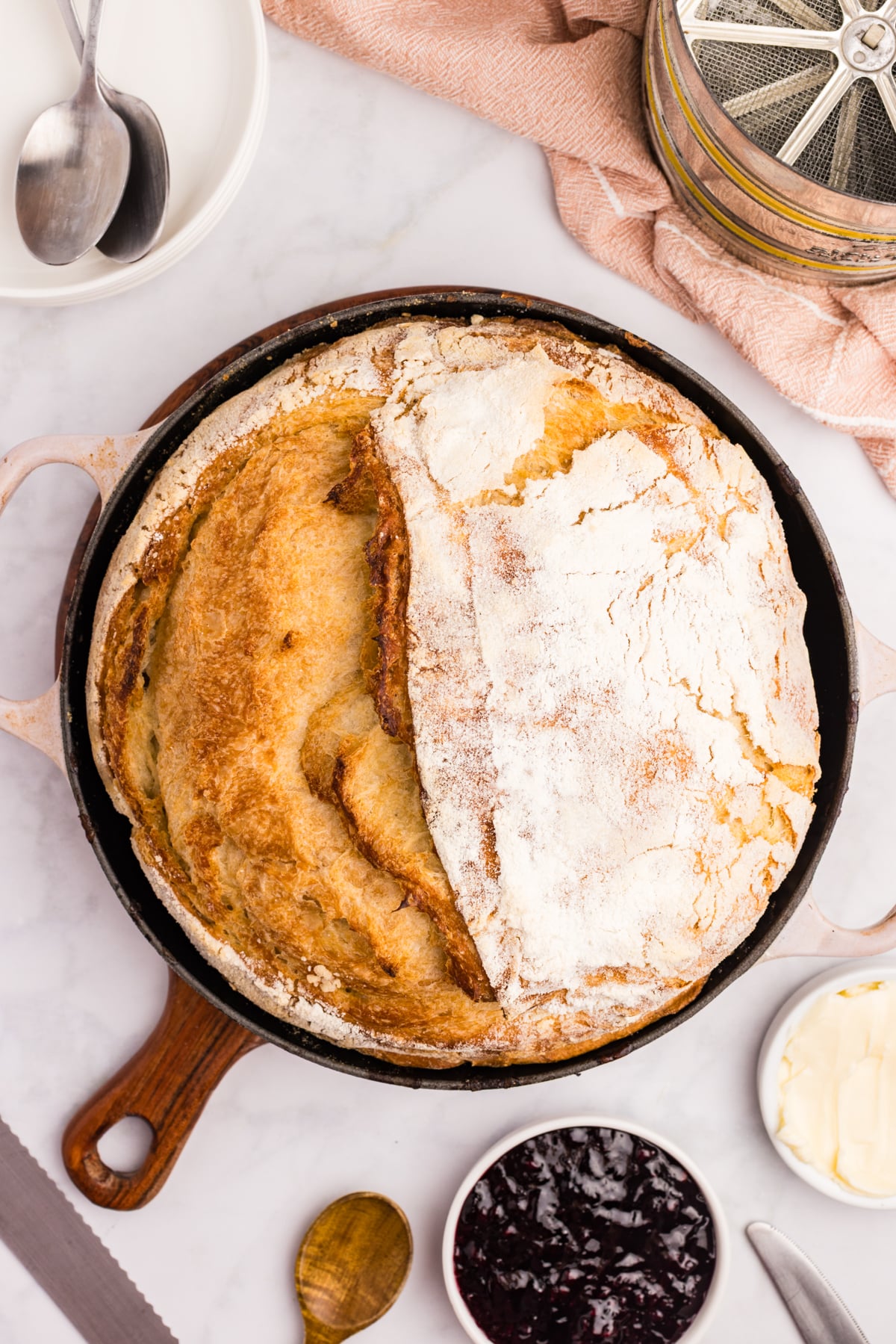
- Remove the lid and reduce the temperature of the oven to 375ºF (190ºC). Bake for another 25 minutes, or until the bread has an internal temperature of 205-210ºF (96-99ºC).
- The loaf should sound hollow and have a nice golden crust. Remove it from the Dutch oven and place on a cooling rack.
- For the best results and best texture, let the bread cool for 2 hours before slicing.

Notes
Nutrition
Please note that some of my blog posts here at Little Home in the Making may contain affiliate links. If you make a purchase through these links, I will get a small commission at no additional cost to you. See our disclaimer for more information.


Dorothy Bigelow says
This bread smells heavenly and tastes amazing! It's so easy and is amazing toasted with jam OR made into french toast (SO GOOD!).